

This article was originally published on the Game Developer website on January 5th, 2014
Introduction
I have always been interested in storytelling although my professional career rarely gave me the opportunity to put in practice my knowledge. During my researches, I notably attended psychological anthropology lessons at the Pierre Mendes France University of Grenoble.
Wikipedia defines the psychological anthropology as "an interdisciplinary subfield of anthropology that studies the interaction of cultural and mental processes. This subfield tends to focus on ways in which humans' development and enculturation within a particular cultural group shape processes of human cognition, emotion, perception, motivation and mental health."
In other words, the psychological anthropology analyzes the mechanisms of the collective unconscious and tries to define the approach of each culture regarding a wide range of themes. Thus, I am convinced that this field can be used in video games to better anticipate the player reactions and to encourage the emergence of specific feelings.
I will start this article introducing the mechanisms of the collective unconscious and I will then analyze the theme of "monsters".
This blog article includes spoilers from The Last Of Us.
A matter of images
|
The term "image" comes from the Latin word "imago" which refers to funeral masks painted during the first centuries of the Christian era. Images as studied in psychological anthropology are not strictly physical representations of either persons or places. It can have an infinite number of forms: family photographs, furniture, stamp collections, jewels, musical instruments... These images are described as relics – or artificial images contrary to natural ones which are the immaterial results of an inner process triggered by striking memories. In fact, the artificial images only play as intermediaries to remind the natural ones / the past experiences. No matter the kind of object, it refers to a relationship that only an initiated person can decipher. A person sometimes transfers his image to his close relations. The most common example deals with collections: stamps, statuettes, rocks... Indeed, offering collectibles often becomes some kind of game / ritual. It is likely that the relations moreover get steeped in this spiral by definitely binding the collectibles to the collector. It is important to note that an image never dies out: it remains latent as any unconscious mechanism. Although collections generally end in storage rooms like photographs fade, the collector always keeps the natural image deep down within himself. It can rise again while facing a similar relic, even several decades later. |
A portrait from the Faiyoum Basin |

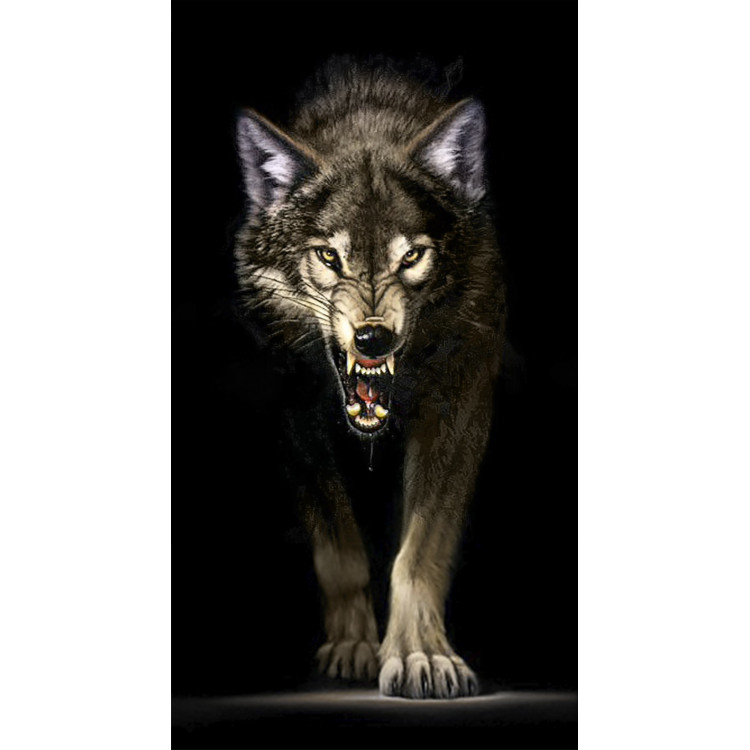
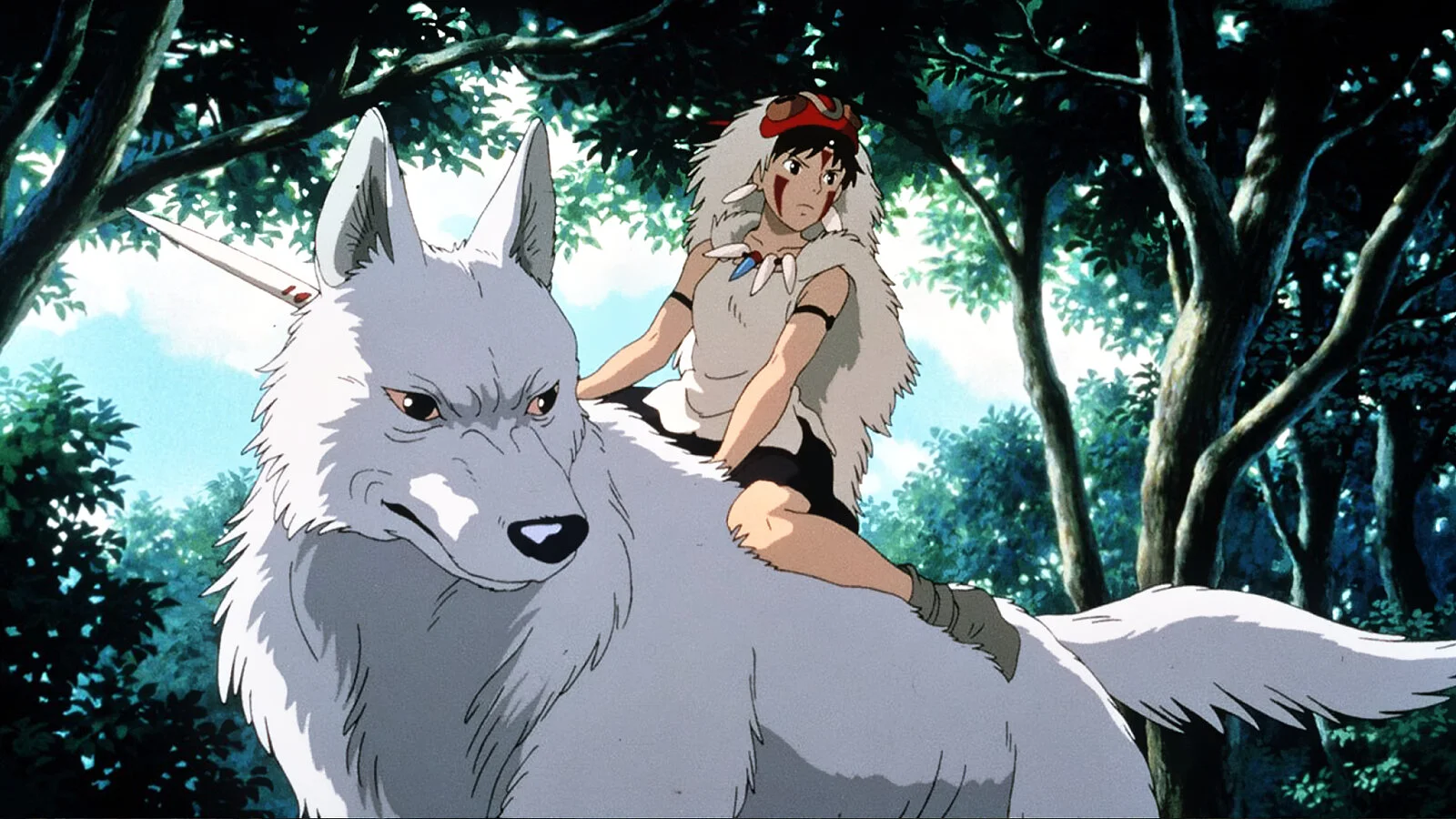
These two characteristics actively participate in the development of the collective unconscious while applied to a larger and deeper scale. It is notably due to the propagation over centuries and the assimilation since the early childhood of tales, proverbs, religious teaching and any cultural elements. That is how tales (like Little Red Riding Hood or Three Little Pigs) have matched the wolves to the archetype of the predator in the Western culture. Yet, wolves only attack man at extremely rare occasions. It is even venerated as protectors in other cultures, especially in Japan.
|
|
|
The monsters
The theme of "monsters" is shared by almost all civilizations. The classical definition refers to hybrid creatures stuck between two worlds.
Here some examples from the Greek culture:
 |
Cerberus: a three-headed dog, son of a Titan and a woman half-human half-serpent. It guards the entrance of the underworld on the banks of the Styx. Venomous snakes coils around his neck. It represents the absence of expiation: mortals must face the acts done in the past, the present and the future (hence the three heads). |
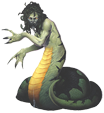 |
Gorgons: whom the most famous version deals with the beautiful Medusa transformed in a monster by the envious Athena. These creatures have snakes for hair and can turn anyone who looks at them to stone. It represents the powerlessness of mortals facing Gods. In Ancient Greece, a lot of people used to wear gorgonians (amulets showing a Gorgon head) to protect themselves from curses and evil spirits. |
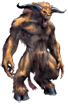 |
The Minotaur: a blood-thirsty creature with the head of a bull on a body of a man. It was born from a white bull sent by Poseidon and King Minos' wife. In reality, the Minotaur may be Minos himself. It symbolizes humanity's inner beast, repressed trauma, and the monstrous consequences of hubris, representing our wild, animalistic desires hidden within the 'labyrinth' of the mind. |
Classical monsters are repulsive, hostile, primal (in contrast with the modern society), have several arms, sticky tentacles, large glassy eyes… They are frightening – especially for children who have many nightmares until 6 years old. Thus, nightmares are an important part of the cerebral maturation process. It allows the child to exteriorize the anxiety he can’t express by other means. The fact that most of the monsters are anthropomorphic – i.e. look like humans – greatly participates in this process by binding the child’s anxiety to himself.
Using monsters in horror games can make the player jumping and create an insane / disturbing atmosphere like the Silent Hill series. This is however an "easy solution" which only works in the short term: facing monsters becomes a routine and the game tension considerably decreases once the player has overcome his fear. Likewise, the player unconscious matches the monsters to the player anxiety and generates satisfaction / relief while defeating it. The best example that comes to my mind is Doom 3 which gradually becomes a classical FPS where the player can easily guess where next enemies will spawn – breaking the surprise effect and psychologically getting him ready for the fight.
|
Let's now study the modern definition of the term – i.e. the image nowadays people have. You can see below a street interview carried out in 2005 by the social studies department of the Pierre Mendes France University. The question asked was: "What do you consider as monstrous?". The people who were questioned often answer "Outlaws" (Human / Real) which includes all kinds of criminals from juvenile delinquents to serial killers. Serial killers are always described by Medias and victims’ families as "monsters", "aliens" or "predators". People didn't choose these words randomly. Indeed, binding the image of monsters to criminals sentenced for dark or barbaric acts is a perfect way to differentiate ourselves from something we can't understand and, at the same time, to define our own identity. For further information about this self-defining process, see also the Valladolid debate, or the trial scene in Planet of the Apes if you prefer sci-fi. |
|
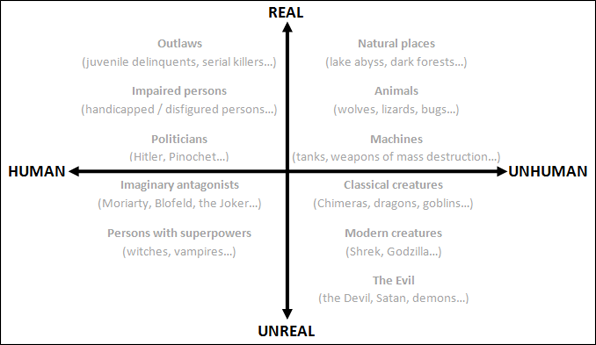
The Last Of Us is an excellent example to both support this differentiation process and to show that classical and modern monsters can work together in a same story. The first hours introduce the gameplay, the outbreak, the new world and the two protagonists – Joel and Ellie. The Infected get more and more monstrous to maintain the player under pressure: Runners, Stalkers, Clickers and then Bloaters. To prevent him getting bored, the story gradually focuses on relations between survivors and takes a darker turn. The more the protagonists encounter human opponents, the more they look like Joel who is himself described as “a brutal survivor having lost everything he valued in life and with few moral lines left to cross”. The story finally reaches its climax during the Chapter 9 “Lakeside Resort” when Ellie meets a group of survivors leaded by a character named David – Joel is supposed to be dead at this moment. It turns out that David and his group are terrifying cannibals. The soldiers and the raiders that Joel and Ellie previously met were acting as groups / entities without any leader. At the contrary, David acts as a catalyst and embodies the perfect archetype of the shadow as Joseph Campbell described it - the darkest side of the protagonist pushed to the extreme. By facing David, the player absolves the Joel’s past behavior and affirms himself as a genuine “human”.

Conclusion
In conclusion, psychological anthropology offers a meaningful lens through which we can better understand and anticipate how players emotionally and cognitively engage with video games. By examining the deeper mechanisms of collective unconscious and cultural symbolism, narrative designers can craft more resonant and psychologically rich experiences. I hope this perspective inspires others to look beyond surface mechanics toward the underlying human experiences that make games truly compelling.
I hope you enjoy the read. Here additional resources if you are interesting the topic:
- Handbook of Psychological Anthropology - Philip K. Bock
- Psychological Anthropology: A Reader on Self in Culture- Robert A. LeVine
- The Hero with a Thousand Faces - Joseph Campbell
- On Monsters: An Unnatural History of Our Worst Fears - Stephen T. Asma
- Real-Life Monsters: A Psychological Examination of the Serial Murderer - Stephen J. Giannangelo